jdk LinkedList工作原理分析

jdk LinkedList工作原理分析

List接口的实现类之一ArrayList的内部实现是一个数组,而另外一个实现类LinkedList的内部实现是使用双向链表。

继承结构

1
2
3
public class LinkedList<E>
extends AbstractSequentialList<E>
implements List<E>, Deque<E>, Cloneable, java.io.Serializable

LinkedList是一个继承于AbstractSequentialList的双向链表。可以被当作双端队列进行操作。

LinkedList是非同步的。

成员变量

1
2
3
4
5
6
//链表的节点数量
transient int size = 0;
//链表的首节点
transient Node<E> first;
//链表的尾节点
transient Node<E> last;

我们看下node的节点定义。

Node结构

1
2
3
4
5
6
7
8
9
10
11
12
13
private static class Node<E> {
//当前节点
E item;
//后节点
Node<E> next;
//前节点
Node<E> prev;
Node(Node<E> prev, E element, Node<E> next) {
this.item = element;
this.next = next;
this.prev = prev;
}
}

构造函数

LinedList有一个无参的构造函数,和一个集合参数构造函数。

1
2
3
4
5
6
7
8
9
10
11
12
13
14
15
16
17
18
19
20
21
22
23
24
25
26
27
28
29
30
31
32
33
34
35
36
37
38
39
40
41
42
43
44
45
46
47
48
49
50
51
52
53
54
55
56
57
58
59
60
61
62
63
64
65
66
67
68
69
70
71
72
73
74
75
76
public LinkedList() {
}

public LinkedList(Collection<? extends E> c) {
//调用无参构造函数
this();
addAll(c);
}

public boolean addAll(Collection<? extends E> c) {
//传入当前节点个数,此时size为0,并将collection对象传入进去
return addAll(size, c);
}

public boolean addAll(int index, Collection<? extends E> c) {
// 索引越界检查
checkPositionIndex(index);
//将collection转换为数组对象
Object[] a = c.toArray();
//需要添加的元素数量
int numNew = a.length;
if (numNew == 0)
return false;

Node<E> pred, succ;
if (index == size) { //把集合c插入到最后面
succ = null;
pred = last;
} else {
succ = node(index); //插入中间
pred = succ.prev;
}
for (Object o : a) { //循环插入节点
@SuppressWarnings("unchecked") E e = (E) o;
Node<E> newNode = new Node<>(pred, e, null);
if (pred == null)
first = newNode;
else
pred.next = newNode;
pred = newNode;
}
if (succ == null) { //如果插入最后面,则last节点是最后一个插入的节点
last = pred;
} else { //如果插入中间,最后插入节点的下一个节点当前节点,当前节点的上一个节点是最后插入节点
pred.next = succ;
succ.prev = pred;
}
size += numNew; //节点大小增加集合的元素数量
modCount++; //修改次数+1
return true;
}

private void checkPositionIndex(int index) {
if (!isPositionIndex(index))
throw new IndexOutOfBoundsException(outOfBoundsMsg(index));
}

private boolean isPositionIndex(int index) {
return index >= 0 && index <= size;
}

//node方法根据索引找到对应的节点
Node<E> node(int index) {
// 如果索引比链表的数量一半还要小,从前往后找,花费O(n)时间
if (index < (size >> 1)) {
Node<E> x = first;
for (int i = 0; i < index; i++)
x = x.next;
return x;
} else { //否则从后往前找
Node<E> x = last;
for (int i = size - 1; i > index; i--)
x = x.prev;
return x;
}
}

方法

我们还是挑选几个主要的方法讲解一下。

boolean add(E e)

添加元素到链表的最后位置

1
2
3
4
5
6
7
8
9
10
11
12
13
14
15
16
17
18
19
public boolean add(E e) {
linkLast(e);
return true;
}

void linkLast(E e) {
final Node<E> l = last;
//添加元素到链表的尾部,所以这个新节点是链表的最后一个节点,它的前节点是目前链表的尾节点,后节点为null
final Node<E> newNode = new Node<>(l, e, null);
//尾节点变成新节点
last = newNode;
//如果一开始节点还没有设置,那么新节点也就是第一个节点(首节点)
if (l == null)
first = newNode;
else //否则新节点是目前链表尾节点的下一个节点
l.next = newNode;
size++; //节点数加1
modCount++; //修改次数加1
}

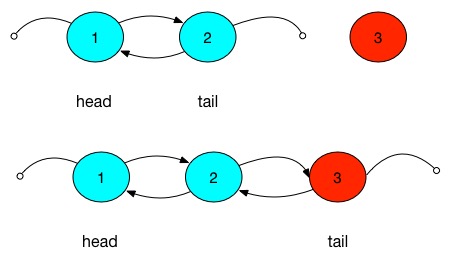
上图第一个图表示已经有1,2节点的LinkedList调用add方法,第二个图表示添加一个节点3后的情况。

原先尾节点的下一个节点变为节点3,新节点3的前节点变为原先的尾节点2,新节点的后节点为null,同时链表的尾节点变为节点3

void add(int index, E element)

添加元素到链表中的指定位置

1
2
3
4
5
6
7
8
9
10
11
12
13
14
15
16
17
18
19
20
21
22
23
24
25
26
27
28
29
30
31
32
33
34
public void add(int index, E element) {
checkPositionIndex(index); //检查索引不能超过链表的个数,不能小于0
if (index == size) //如果在链表的尾部插入节点,则调用linlast方法,上面已分析
linkLast(element);
else //否则调用linbefore方法,参数为要插入的元素和节点对象
linkBefore(element, node(index));
}

void linkLast(E e) {
final Node<E> l = last;
final Node<E> newNode = new Node<>(l, e, null);
last = newNode;
if (l == null)
first = newNode;
else
l.next = newNode;
size++;
modCount++;
}
//succ节点的位置是要插入节点的位置
void linkBefore(E e, Node<E> succ) {
// assert succ != null;
final Node<E> pred = succ.prev;
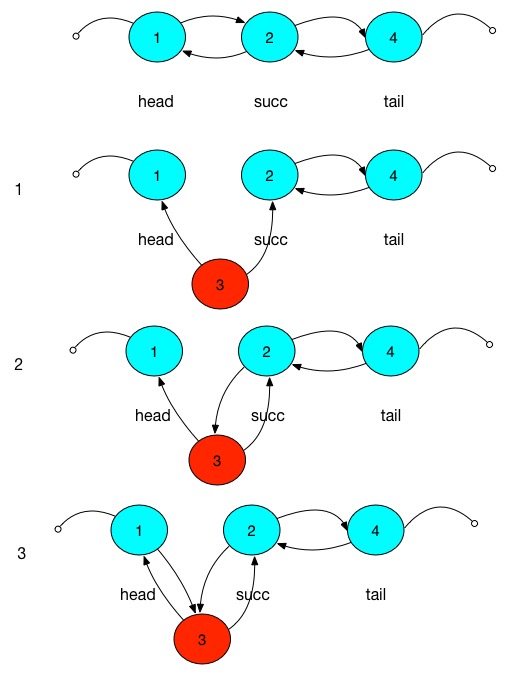
//1: 新节点的前节点是succ节点的前节点,后节点是succ节点
final Node<E> newNode = new Node<>(pred, e, succ);
//2: succ节点的前节点是新节点
succ.prev = newNode;
if (pred == null) //如果succ是首节点,则只需要重新设置下新节点为首节点就好了,首节点的下一个节点在步骤1设置过了
first = newNode;
else
pred.next = newNode; 3:succ的前节点的后节点是新节点
size++;
modCount++;
}

上面图中的1,2,3对应下图

E remove(int index)

移除指定位置上的节点

1
2
3
4
5
6
7
8
9
10
11
12
13
14
15
16
17
18
19
20
21
22
23
24
25
26
27
public E remove(int index) {
checkElementIndex(index);
return unlink(node(index));
}

E unlink(Node<E> x) {
// assert x != null;
final E element = x.item;
final Node<E> next = x.next;
final Node<E> prev = x.prev;
if (prev == null) { //如果删除的是首节点
first = next;
} else {
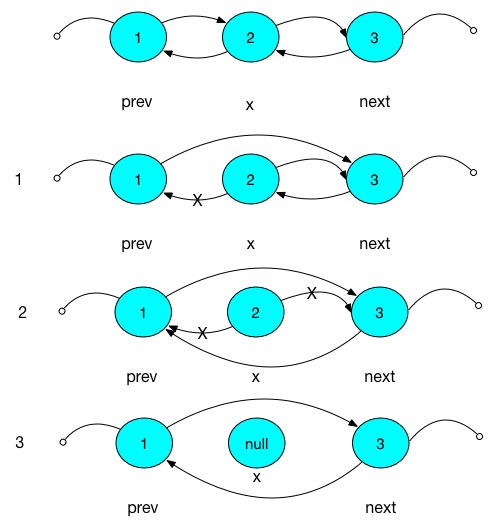
prev.next = next; //1
x.prev = null; //1
}
if (next == null) { //如果删除的是尾节点
last = prev;
} else {
next.prev = prev; //2
x.next = null; //2
}
x.item = null; //3
size--;
modCount++;
return element;
}

上面代码中的1,2,3在如图中表示

E get(int index)

获取索引位置上的元素

1
2
3
4
public E get(int index) {
checkElementIndex(index);
return node(index).item; //通过上面介绍的算法找到节点,返回节点元素值
}

ListIterator listIterator(int index)

返回一个双向的迭代器

1
2
3
4
5
6
7
8
9
10
11
12
13
14
15
16
17
18
19
20
21
22
23
24
25
26
27
28
29
30
31
32
33
34
35
36
37
38
39
40
41
42
43
44
45
46
47
48
49
50
51
52
53
54
55
56
57
58
59
60
61
62
63
64
65
66
67
68
69
70
71
72
73
74
75
76
77
78
79
80
81
82
83
84
85
86
87
88
public ListIterator<E> listIterator(int index) {
checkPositionIndex(index);
return new ListItr(index);
}

private class ListItr implements ListIterator<E> {
private Node<E> lastReturned;
private Node<E> next;
private int nextIndex;
private int expectedModCount = modCount;
ListItr(int index) {
// assert isPositionIndex(index);
next = (index == size) ? null : node(index);
nextIndex = index;
}
public boolean hasNext() {
return nextIndex < size;
}
public E next() {
checkForComodification();
if (!hasNext())
throw new NoSuchElementException();
lastReturned = next;
next = next.next;
nextIndex++;
return lastReturned.item;
}
public boolean hasPrevious() {
return nextIndex > 0;
}
public E previous() {
checkForComodification();
if (!hasPrevious())
throw new NoSuchElementException();
lastReturned = next = (next == null) ? last : next.prev;
nextIndex--;
return lastReturned.item;
}
public int nextIndex() {
return nextIndex;
}
public int previousIndex() {
return nextIndex - 1;
}
public void remove() {
checkForComodification();
if (lastReturned == null)
throw new IllegalStateException();
Node<E> lastNext = lastReturned.next;
unlink(lastReturned);
if (next == lastReturned)
next = lastNext;
else
nextIndex--;
lastReturned = null;
expectedModCount++;
}
public void set(E e) {
if (lastReturned == null)
throw new IllegalStateException();
checkForComodification();
lastReturned.item = e;
}
public void add(E e) {
checkForComodification();
lastReturned = null;
if (next == null)
linkLast(e);
else
linkBefore(e, next);
nextIndex++;
expectedModCount++;
}
public void forEachRemaining(Consumer<? super E> action) {
Objects.requireNonNull(action);
while (modCount == expectedModCount && nextIndex < size) {
action.accept(next.item);
lastReturned = next;
next = next.next;
nextIndex++;
}
checkForComodification();
}
final void checkForComodification() {
if (modCount != expectedModCount)
throw new ConcurrentModificationException();
}
}

LinkedList和ArrayList的比较

1.两者的设计理念不同,ArrayList是基于数组,而LinkedList基于节点,也就是链表。所以LinkedList没有容量的概念。

2.两者的使用场景不同。ArrayList适用于读多写少的场景,LinkedList适用于写多读少的场景。

因为LinkedList要找到节点的必须要遍历一个一个的节点,直到找到为止。而ArrayList完全不需要,因为ArrayList内部维护一个数组,直接根据索引找到需要的元素就好了。